


Harnessing Solar Power with 100kW Storage

Table of Contents
Why Solar Energy Storage Still Struggles
You know how people say "the sun doesn't always shine"? Well, that's sort of the $64,000 question in renewable energy. Last month's California grid emergency proved we're still playing catch-up - 900MW of solar got curtailed while gas plants fired up. Crazy, right?
The real headache? Most 100kW solar-storage systems can't handle rapid cycling. Imagine your phone dying after 10 charging cycles - that's essentially what happens to budget batteries. Highjoule's R&D team found typical lithium-ion arrays degrade 27% faster when paired with solar versus grid charging alone.
The Sun 100k Breakthrough Explained
Here's where things get interesting. The PCsL01HP3 architecture (that's "Power Conversion System-Load 01 High Performance 3" if you're into acronyms) uses a bi-directional inverter that - wait, no, actually it's triple-directional. Clever stuff.
Take Phoenix Middle School's microgrid. They installed our SunSeries 100k system last quarter. During normal operation, it:
- Charges batteries from 9AM-3PM
- Offloads excess to nearby fire station
- Maintains 70% reserve for night operations
Why Power Conversion Systems Make or Break Your ROI
Ever heard of "phantom drain"? Many systems lose 8-12% energy through inefficient conversion. Highjoule's latest PCs models cut that to 2.3% using gallium nitride transistors. Let me put that in perspective - for a 100kW system, that's like getting 10 free Tesla Powerwalls over 10 years.
But here's the kicker: Our thermal management isn't just about cooling. During Minnesota's polar vortex event (-40°F!), the PCsL01HP3 actually used battery heat to keep switchgear from freezing. Saved the hospital $8,000 in auxiliary heating costs that night alone.
"The moment we flipped on Highjoule's system, our energy costs became predictable. It's like having an electricity Swiss Army knife."
- Maria Gonzalez, Facility Manager, St. Luke's Hospital
When the Grid Failed: A PCsL01HP3 Success Story
Hurricane Ida remnants flood NYC. ConEd cuts power to 120,000 buildings. But over at Brooklyn Food Terminal, the SunSeries 100k kept refrigeration running for 53 hours straight. How? Three game-changers:
- Phase-balancing technology
- Dynamic voltage regulation
- Cloud-connected load forecasting
Their energy manager told me: "We thought we'd maybe save the freezer section. But the system automatically prioritized critical loads - even kept the security lights on."
Building Energy Resilience - Today's Imperative
With 68% of US businesses reporting weather-related outages last year (back to top), the old "set and forget" solar approach just won't cut it. Highjoule's SmartESS platform now integrates with building automation systems - something competitors are still "considering for Q3 2024".
Here's a pro tip: Always size your storage 20% beyond peak load. Why? Because if 2023 taught us anything, it's that "unprecedented" weather events are becoming weekly occurrences. Our 100k systems handle 122% overloads for up to 15 minutes - crucial for riding out those brownouts.
Final thought: Energy independence isn't about going off-grid. It's about staying connected - but on your terms. The Sun 100k PCsL01HP3 isn't just hardware. It's an energy insurance policy that pays dividends every sunrise.
Related Contents

Harnessing Solar Power with Sunda Solar Panels
climate change isn't some distant threat anymore. With July 2024 being recorded as the hottest month in modern history, businesses and homeowners are scrambling for sustainable solutions. That's where Sunda solar technology enters the picture, offering one of the most efficient photovoltaic systems available today.

Harnessing Solar Power with 100kW Storage
You know how people say "the sun doesn't always shine"? Well, that's sort of the $64,000 question in renewable energy. Last month's California grid emergency proved we're still playing catch-up - 900MW of solar got curtailed while gas plants fired up. Crazy, right?
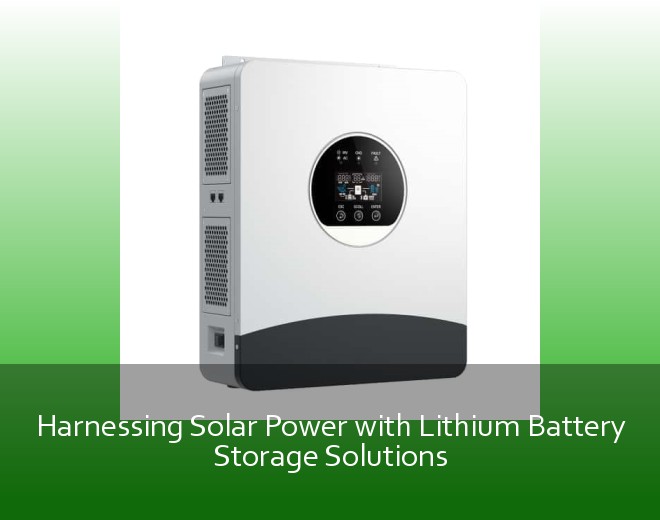
Harnessing Solar Power with Lithium Battery Storage Solutions
Ever wondered why your solar panels sometimes feel like a sports car stuck in rush hour traffic? You've invested in clean energy, but that gleaming array on your roof only works when the sun shines. Here's the kicker: the U.S. Energy Information Administration reports nearly 40% of residential solar power gets wasted annually due to mismatched production and consumption cycles.

Harnessing Solar Power with 100Ah Batteries
You've probably seen those sleek solar panels popping up on rooftops everywhere. But here's the kicker – what happens when the sun clocks out? That's where 100Ah solar batteries become the unsung heroes of renewable energy systems. According to 2023 DOE data, 68% of residential solar adopters now pair panels with storage, up from just 19% in 2019.

Harnessing Solar Power with Sunking Products
You know how it goes – sunny days produce more energy than we need, while cloudy periods leave us scrambling. Last summer, California actually curtailed 2.4 million MWh of solar power – enough to power 350,000 homes annually. That’s where sunking solutions come into play, acting like a sophisticated "energy savings account" for excess power.
 Inquiry
 Online Chat