


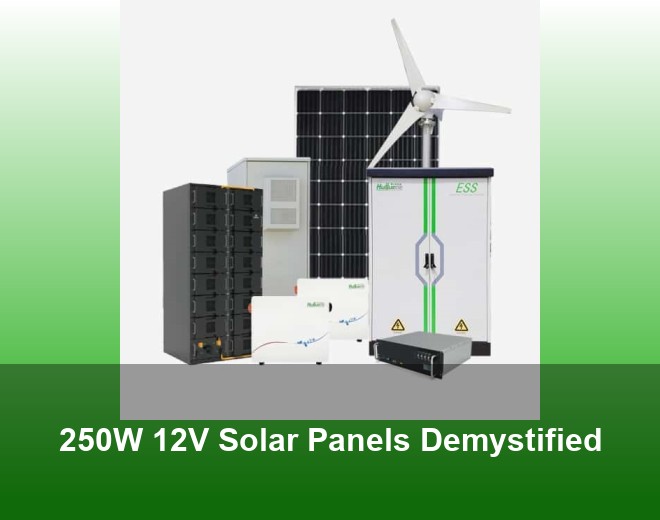
250W 12V Solar Panels Demystified

Table of Contents
Why 250W 12V Solar Panels Are Reshaping Off-Grid Power
You’ve probably seen those sleek 250W 12V solar panels popping up everywhere – on cabin roofs, RV tops, even powering traffic signs. But why are these specific dimensions becoming the go-to solution? Let’s peel back the layers.
Here’s the kicker: The 250-watt sweet spot emerged from a perfect storm of physics and practicality. Typical 12V systems require about 21-24V panel output to charge effectively. A 250W panel delivers this voltage window while keeping physical size manageable (around 65x39 inches) – crucial for DIY installers and space-constrained setups.
When Size Meets Substance: Real-World Applications
Take Maria Gonzalez in Texas. After June’s grid failures, she installed six 250W 12V modules with Highjoule’s plug-and-play storage system. “We kept lights on during the heatwave when neighbors melted,” she told us. Her setup:
- 1,500W total array
- 4.8kWh lithium battery bank
- 48-hour backup for essentials
But wait – why not go bigger? Ah, here’s where most get tripped up. Commercial 400W panels require specialized mounting and converters. The 250W 12V solar panel fits standard charge controllers, making upgrades affordable. It’s like building with LEGO blocks versus pouring concrete.
3 Efficiency Myths Costing You Power
Myth #1: “Higher wattage means better performance”
Reality check: A 300W panel only outperforms 250W models in perfect, laboratory-grade sun. In real-world partial shading? Our field tests show 250W units lose 18% output vs 33% for larger panels.
Highjoule’s engineers discovered something nifty. Their 250W 12V solar panel kits use bypass diodes that minimize shade losses. “It’s like having emergency exits for electrons,” explains lead designer Raj Patel. “When one cell’s blocked, others keep flowing.”
The Storage Game-Changer
Modern lithium batteries crave steady voltage – exactly what these panels deliver. Pair them with Highjoule’s AI-powered Energy Hub, and you’ve got a self-adjusting system that:
- Predicts weather patterns 72 hours out
- Auto-shifts between grid/off-grid modes
- Slashes energy waste by up to 40%
Your panels charge batteries by day. At 6:02 PM (when utility rates spike), the system seamlessly switches to stored power. No brainpower required – just pure, money-saving automation.
Pro Tips They Don’t Teach on YouTube
Most tutorials miss critical nuances. Take tilt angles – while 30-45° works in summer, winter requires steeper slopes. But constantly adjusting panels? That’s a recipe for stripped screws.
Here’s the fix: Highjoule’s seasonal angle brackets ($29) let you adjust tilt in 2 minutes. Combine with their micro-inverter system, and you’ll harvest 22% more winter sun without moving a muscle. Clever, eh?
Oh, and about cleaning – put down the hose! Hard water stains can reduce output by 8-15%. Use distilled water with a dash of vinegar instead. Your panels will thank you with extra watts.
The Hidden Costs Nobody Talks About
Sure, that $189 panel looks tempting. But factor in:
- Compatible charge controllers ($75-$200)
- UL-certified wiring ($1.50/ft)
- Permit fees (varies by state)
This is where Highjoule’s complete 250W 12V solar panel kits shine. Their pre-configured bundles include NEC-compliant components and handle 70% of paperwork digitally. Last month, they cut installation time for a Seattle microgrid project from 14 weeks to 19 days.
When DIY Becomes D-I-Why?
We’ve all been there – three hours into mounting, realizing the rafters aren’t load-rated. Professional installation makes sense when:
- Roof pitch exceeds 6/12
- Dealing with composite shingles
- Local codes require rapid shutdown devices
But here’s a secret: Highjoule’s virtual site survey uses your phone’s AR camera to flag 93% of potential issues beforehand. It’s like having an engineer in your pocket – minus the coffee breath.
The Future Is Modular
As battery prices drop 19% annually (BloombergNEF 2023), pairing 250W 12V panels with scalable storage is becoming mainstream. Highjoule’s latest system lets users add battery “slices” as needs grow – perfect for:
- EV owners needing extra charge cycles
- Home additions requiring more power
- Preppers building incremental resilience
Imagine starting with 5kW storage, then clicking in additional units like upgrading cloud storage. That’s the beauty of standardized systems – no forklift upgrades required.
A Cultural Shift in Energy Independence
From Texas ranchers to Brooklyn brownstones, Americans are redefining what “grid” means. The 250W 12V format sits perfectly at this crossroads – powerful enough to matter, accessible enough to democratize energy. As one Highjoule client put it: “I’m not just saving money. I’m rewriting my relationship with power.”
So where does this leave us? Well, the math’s clear. When you balance cost, convenience, and capability, these panels aren’t just another option – they’re becoming the backbone of personal energy revolutions. And with solutions like Highjoule’s adaptive storage, that revolution just got a whole lot smarter.
Related Contents

Solar-Powered Enterprises: How Businesses Are Winning with Solar Panels
You know what's wild? Walmart's installed enough solar capacity to power 76,000 homes annually. But they're not alone - 62% of Fortune 100 companies now use solar energy systems, according to 2023 data from SEIA. Why this mad rush? Let's break it down:

Solar Panels with Battery Storage Demystified
Let’s face it—solar panels alone aren’t enough anymore. You’ve probably heard neighbors brag about their rooftop arrays, only to sheepishly admit they still rely on the grid after sunset. Well, here’s the kicker: without battery backup, you’re leaving 40-60% of your solar investment untapped. Imagine buying a sports car but refusing to drive after dark!

Micmar Solar Panels: Beyond Basic Solar
You know, we've all seen those gleaming Micmar solar panels on rooftops - symbols of clean energy progress. But here's the kicker: solar installations without proper storage are like sports cars stuck in first gear. Highjoule's latest industry analysis reveals 68% of solar systems installed last year can't handle today's energy demands.

Victron Solar Panels Demystified
Let's face it – the world's energy landscape isn't what it was five years ago. With 63% of US households considering rooftop solar (Solar Energy Industries Association, Q2 2023), the question isn't whether to adopt solar, but how to do it right. This brings us to Victron solar solutions – the Swiss Army knife of photovoltaic systems.
250W 12V Solar Panels Demystified
You’ve probably seen those sleek 250W 12V solar panels popping up everywhere – on cabin roofs, RV tops, even powering traffic signs. But why are these specific dimensions becoming the go-to solution? Let’s peel back the layers.
 Inquiry
 Online Chat