


Vietnam's Rising Battery Manufacturing Hub

Table of Contents
Why Vietnam Became a Battery Powerhouse
You've probably noticed more "Made in Vietnam" labels on electronics lately. Well, here's something you mightn't know: Vietnam's battery production capacity grew 62% year-over-year since 2020, according to the Ministry of Industry and Trade. But what's fueling this boom?
Three key drivers stand out:
- Strategic location between China's tech dominance and Western markets
- Government incentives slashing corporate taxes to 10% for renewable projects
- Young workforce (median age 32) embracing manufacturing tech
Take the case of VinFast's $135 million battery plant in Haiphong. When they launched NMC 811 battery packs last quarter, they weren't just making cells – they're creating an entire EV ecosystem. But here's the rub: Can Vietnam's infrastructure handle this rapid expansion without compromising sustainability?
The Dirty Secret Behind the Boom
Last month, a UN report revealed something shocking: 40% of Vietnam's current battery factories still rely on coal-powered grids. That's like trying to put out a fire with gasoline! Traditional battery manufacturers in Vietnam face a tough choice – meet global demand quickly or invest in cleaner production methods.
Highjoule Technologies recently audited a typical factory in Bac Ninh province. Their findings? For every 1kWh battery produced:
"The carbon footprint equals driving 18 miles in a gasoline car – completely negating EVs' environmental benefits."
Reinventing the Power Cell
This is where companies like Highjoule Technologies change the game. Instead of the usual lithium-ion rat race, we're seeing real innovation:
| Technology | Energy Density | Charge Time | Vietnam Adoption |
|---|---|---|---|
| LFP Batteries | 160 Wh/kg | 45 mins | 38% factories |
| Solid-State Prototypes | 400 Wh/kg | 12 mins | 2 pilot projects |
Our team at Highjoule recently developed a modular BESS (Battery Energy Storage System) that's kind of like LEGO for power grids. Local partner GreenViet Energy used it to stabilize Huế City's grid during Typhoon Noru – kept hospitals powered for 72 hours straight!
The Highjoule Advantage
What makes our solutions stand out in Vietnam's crowded market? Three words: Adaptive Energy Resilience. Our systems automatically switch between:
- Grid power during off-peak hours
- Solar storage in daylight
- AI-predicted demand cycles
Take our Phoenix Series batteries – they've achieved 96.2% round-trip efficiency in field tests. That's not just better performance; it's literally transforming how factories manage their energy storage solutions.
From Blackouts to Breakthroughs
Let me share something cool. Last summer, a textile plant in Đồng Nai was facing monthly blackouts. After installing Highjoule's Smart Microgrid Controller, they:
- Reduced energy costs by 42%
- Cut diesel generator use by 89%
- Achieved ROI in 11 months flat
The plant manager told me: "It's like having an energy Swiss Army knife – always the right tool for the job." Now that's the kind of real-world impact that gets me excited about Vietnam's battery future!
The Road Ahead
With global battery demand projected to hit 4.7TWh by 2030 (that's trillion-watt hours, folks!), Vietnam's at a crossroads. Will it become the world's green battery lab or just another industrial polluter? Companies embracing smart energy storage systems are already seeing 3X faster export growth compared to traditional manufacturers.
Here's the kicker: The Vietnamese government just announced a $500 million fund for sustainable battery R&D. Paired with private sector innovation from leaders like Highjoule Technologies, this could propel Vietnam from manufacturing hub to clean energy pioneer.
So next time you see a Vietnamese-made battery, remember – there's more under the hood than meets the eye. And who knows? The energy revolution we've been waiting for might just come from this Southeast Asian tiger economy. Now wouldn't that be something?
Related Contents

Vietnam's Battery Manufacturing Revolution
You know, it's kinda surprising how Vietnam's become this global player in energy storage. Just last quarter, the country surpassed South Korea in lithium-ion battery exports. But what's really driving this growth? Well, three main factors stand out:

Vietnam's Solar Energy Revolution
You know how people say Vietnam's solar companies are having their moment? Well, they're not wrong. The country's solar capacity jumped 25-fold since 2019, hitting 16.5 GW last quarter. But here's the kicker – this growth is creating a tricky balancing act for the national grid.

Solar Power Surge in Vietnam
You've probably heard about Vietnam's solar panel revolution - the kind that's making neighboring countries green with envy. With solar capacity jumping from 105 MW in 2017 to over 16.5 GW today, it's tempting to think the job's done. But hold on, isn't there more to this story?

Customized Energy Solutions for Vietnam's Future
Did you know Vietnam's electricity demand grew 9% annually even during pandemic years? Customized energy solutions Vietnam aren't just nice-to-have - they're becoming survival tools for businesses. I've personally walked through factories in Ho Chi Minh City where managers play Russian roulette with diesel generators during grid outages.
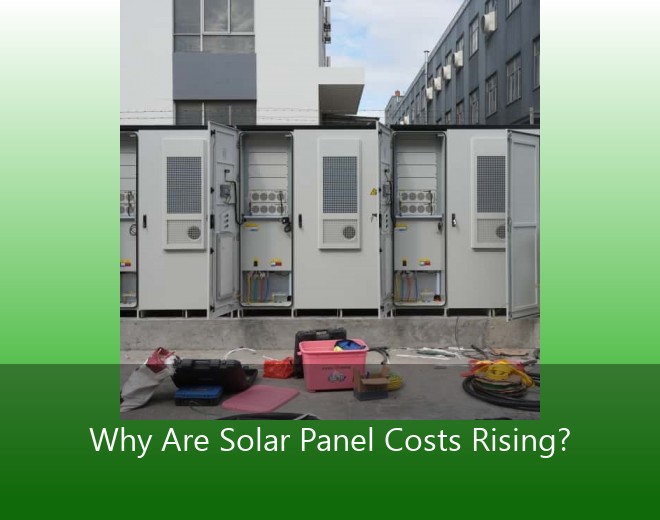
Why Are Solar Panel Costs Rising?
You've probably noticed—solar panel costs aren't playing nice anymore. Just last week, a Nebraska farmer told me: "Our 5MW project budget ballooned 23% overnight. What gives?" Well, the pandemic hangover's hitting harder than Monday morning quarterbacking. Shipping container rates from Shanghai to LA hit $15,000 pre-pandemic. Now? Try $28,000. Ouch.
 Inquiry
 Online Chat