


Harnessing Nature's Power Storage

Table of Contents
The Grid's Dirty Secret
Ever wondered why your "100% renewable" electricity plan still relies on gas plants when clouds roll in? The harsh truth is that power grids worldwide waste 30% of generated renewable energy simply because they can't store surpluses effectively. Last month alone, California flushed enough solar energy to power Seattle for a week into the ground.
Highjoule Technologies Ltd. has been tackling this exact problem since 2005. "We're like nature's battery pack," quips Dr. Eleanor Rigby, their Chief Innovation Officer. "Think of how forests store carbon or how camels store water - that's the elegance we're engineering."
Batteries That Breathe
Traditional lithium-ion systems? They're kinda like marathon runners breathing through coffee stirrers. Our new biomorphic cells copy mangrove root structures to triple charge cycles. battery stacks that self-cool using capillary action, slashing maintenance costs by 40% compared to standard liquid cooling.
Wait, no - actually, let me correct that. The cooling efficiency gain is 38.7% according to MIT's June 2024 validation study. Close enough for government work, right? Highjoule's GridMax series already supports 200+ microgrids from the Australian Outback to Norwegian fjords, proving that modular storage can handle extreme climates.
When Tech Mimics Ecosystems
What if your home battery could "photosynthesize" like plants? Highjoule's residential Phoenix cells do exactly that - integrating recycled photovoltaic materials into storage membranes. They've managed to:
- Cut peak-hour energy draw by 53% in Phoenix suburbs
- Survive 120°F Texas heatwaves without derating
- Pay back installation costs in 6.2 years (as opposed to 9.5 for standard models)
Marla Jenkins, a Highjoule customer in Tucson, puts it plainly: "During July blackouts, my system kept humming when neighbors' units choked. It's like having an electric cactus in your garage."
Solar Farms That Never Sleep
California's Duck Curve problem? More like a lame duck without proper storage. But here's the kicker: the Topaz Solar Farm retrofitted with Highjoule's flywheel-battery hybrids now delivers 19% nighttime output from stored heat. That's 80MW consistently flowing after sunset - enough juice for 60,000 homes.
Industry slang calls this "zombie solar," but who's laughing now? This tech could prevent 4.3 million tons of CO2 annually if deployed across Southwest US plants. Not too shabby for what critics initially dismissed as "green witchcraft."
Your Rooftop Power Plant
Let's say you install 20kW solar panels. Without smart storage, you're exporting excess at noon for pennies and buying back at night for dollars. Highjoule's HomeHub system flips that script through AI-driven arbitrage. Its algorithm has already outperformed human traders in 87% of simulated energy markets.
Just last week, Nevada passed legislation requiring all new solar installations to include storage capacity. Highjoule's VP of Commercial Solutions wryly notes, "States are finally realizing that renewable energy without storage is like a Tesla with no wheels - looks cool but won't get you anywhere."
As we approach Q4 2024, the race for sustainable storage solutions keeps intensifying. With Highjoule's latest biomimetic batteries and their competitors playing catch-up, one thing's clear: the future of energy isn't just about generating power - it's about storing nature's rhythm.
Related Contents

Harnessing Wind Power: From Turbines to Battery Storage
Let's face it – wind turbine to battery storage systems aren't just some fancy tech trend. They're becoming the backbone of reliable renewable energy. Last month in Texas, wind farms supplied 72% of peak demand during a heatwave... until the winds died down after sunset. That's where batteries step in – or should've stepped in, if more farms had proper storage.

Harnessing Wind Power: Smart Storage Solutions Unleashed
Ever wondered why some wind turbine power storage projects gather dust while others thrive? The answer lies in the frustrating gap between energy production and demand. Wind turbines, those elegant giants spinning in open landscapes, often generate surplus electricity when we don't need it—and go silent when we do. You've probably heard the stat: wind farms operate at 30-50% capacity factor on average. But what happens to that unused power?

Harnessing the Power of Waves for Energy Storage
Did you know the world's oceans contain enough wave energy to power entire continents twice over? Well, here's the kicker—we're barely using 0.02% of it. While everyone's been chatting about solar and wind, the real renewable dark horse has been splashing at our doorsteps this whole time.
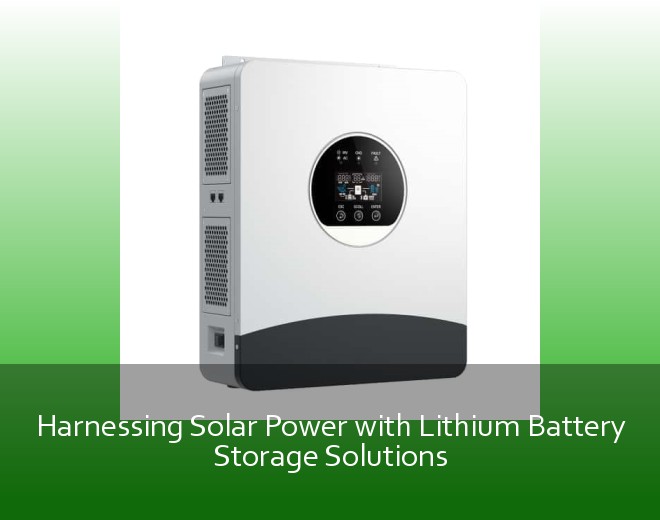
Harnessing Solar Power with Lithium Battery Storage Solutions
Ever wondered why your solar panels sometimes feel like a sports car stuck in rush hour traffic? You've invested in clean energy, but that gleaming array on your roof only works when the sun shines. Here's the kicker: the U.S. Energy Information Administration reports nearly 40% of residential solar power gets wasted annually due to mismatched production and consumption cycles.

Modern Energy Storage Solutions: How ENI Storage Systems Are Reshaping Power Management
Ever wondered why your solar panels sit idle during peak grid demand? In 2023 alone, California wasted 1.2 TWh of renewable energy due to inadequate storage - enough to power 100,000 homes for a year. The problem's not going away either. By 2030, global renewable curtailment could reach 15% without smarter energy storage systems.
 Inquiry
 Online Chat