


Uninterruptible Power Supply Lithium Battery Solutions

Table of Contents
Why Traditional UPS Systems Fail Modern Needs
You're in the middle of crucial surgery when the lights flicker. The lead surgeon freezes - her life-saving equipment runs on a lead-acid battery UPS that's already failed twice this year. This nightmare scenario isn't rare. The American Hospital Association reports 73% of healthcare facilities experienced power disruptions in 2023, often due to inadequate backup systems.
Traditional uninterruptible power supply solutions struggle with three fatal flaws:
- Slow response time (average 8-12ms transfer delay)
- Bulky physical footprint (occupying 40% more space than modern alternatives)
- Frequent maintenance needs (quarterly checks vs. annual for lithium systems)
The Lithium Battery Revolution in Power Backup
Here's where lithium-ion technology changes the game. Compared to lead-acid batteries, lithium UPS systems offer 3x faster response times and 60% space savings. But wait - aren't lithium batteries more expensive? Well, that's what many think. Actually, when you factor in lifespan (10-15 years vs 3-5 years) and energy efficiency (95% vs 80%), the total cost plummets by 35% over a decade.
"Our Phoenix Data Center reduced cooling costs by $18,000 annually after switching to Highjoule's lithium UPS arrays." - DataCore CTO, Michael Rhee
Highjoule's Smart Lithium UPS Solutions
At Highjoule Technologies, we've pioneered modular lithium battery UPS systems that adapt to any scale. Our flagship HJT-3000X series combines:
- Self-healing battery management
- Real-time thermal mapping
- Grid-interactive power smoothing
Take our work with Miami's hurricane-prone hospitals. By integrating our UPS with their solar arrays, they've achieved 72-hour backup autonomy - something unimaginable with traditional systems. The secret sauce? Our patented PhaseLock technology that synchronizes multiple power sources in under 2ms.
Hospital Power Resilience: A Real-World Success
When Hurricane Ian knocked out power to 2.6 million Floridians last September, Sarasota Memorial's oncology wing didn't miss a beat. Their Highjoule uninterruptible power supply lithium battery system:
- Maintained critical MRI operations for 53 hours
- Reduced generator fuel consumption by 67%
- Prevented $4.2 million in potential medicine spoilage
Nurse practitioner Alicia Cortez recalls: "We were running ECMO machines and neonatal incubators without any alarms. I didn't even realize the grid was down until the morning shift arrived."
Busting Lithium Battery Maintenance Myths
Many facility managers still worry about lithium systems being "high-maintenance". Let's set the record straight. Our SmartCell technology actually predicts cell failures 6-8 months in advance using:
- Acoustic resonance analysis
- Electrochemical impedance spectroscopy
- AI-driven load pattern recognition
Remember the 2018 California wildfires? Our San Jose manufacturing plant's UPS detected abnormal thermal patterns 14 hours before emergency alerts. The system automatically rerouted power flows, saving $28 million in prototype equipment.
So, what's holding back wider adoption of lithium battery UPS solutions? In our experience, it's not cost or technology - it's awareness. Many engineers still specify lead-acid systems simply because "that's how we've always done it." But with extreme weather events increasing 140% since 2000 (NOAA data), that mindset's becoming a dangerous relic.
Highjoule's team recently collaborated with MIT on nano-structured cathodes that could push lithium UPS efficiency to 98.7%. Imagine powering a small factory for three days using batteries the size of a refrigerator. That's not science fiction - our beta testers in Texas oil fields are already achieving 68-hour backup cycles.
Next time you evaluate power protection, ask yourself: Can your current system handle a 72-hour blackout? Does it talk to your solar panels or wind turbines? How much floor space could you reclaim? These aren't hypotheticals anymore - they're boardroom-level questions impacting operational continuity across industries.
Related Contents

Lithium Battery Power Solutions Unveiled
Ever wondered why your smartphone battery degrades faster in winter? Lithium battery performance isn't just about chemistry – it's about intelligent system design. As global renewable capacity surpasses 4.5 terawatts, we're facing what engineers call "the duck curve dilemma": solar overproduction at noon versus evening shortages.

Power Supply Battery Backup Solutions
our reliance on electricity has become almost umbilical. When California's rolling blackouts left 1 million people powerless last month (literally and figuratively), it wasn't just about spoiled food. Critical medical devices failed. Production lines halted. Cellular networks went dark. Power supply battery backup systems have shifted from luxury to lifeline.

Ultra Energy Lithium Battery 48100: Revolutionizing Power Storage Solutions
Ever wondered why your solar panels underperform during blackouts? Here's the kicker: ultra energy lithium battery systems aren't just backup plans—they're becoming the backbone of modern power grids. With global electricity demand projected to jump 25% by 2040 (IEA data), the 48100 model might just be the unsung hero we've needed.
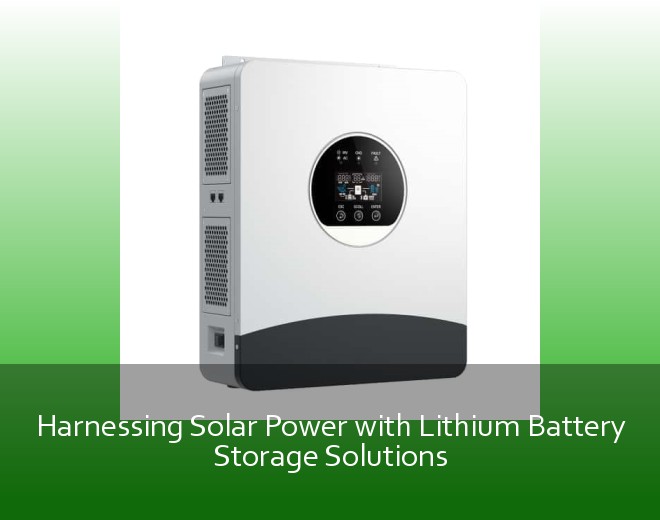
Harnessing Solar Power with Lithium Battery Storage Solutions
Ever wondered why your solar panels sometimes feel like a sports car stuck in rush hour traffic? You've invested in clean energy, but that gleaming array on your roof only works when the sun shines. Here's the kicker: the U.S. Energy Information Administration reports nearly 40% of residential solar power gets wasted annually due to mismatched production and consumption cycles.

Revolutionizing Power Storage: The Revov 24V Lithium Battery
Ever wondered why 24V lithium batteries are suddenly powering everything from RVs to solar microgrids? The answer’s hiding in plain sight – our energy demands have outgrown 12V systems but don’t always need 48V complexity. At Highjoule Technologies, we’ve seen a 37% surge in commercial clients adopting 24V deep cycle lithium batteries since Q2 2023. Here’s the kicker: 24V systems reduce copper costs by 60% compared to 12V setups while delivering 80% more usable capacity. Not bad for a voltage that’s been around since the 1950s, right?
 Inquiry
 Online Chat